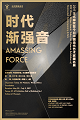
Civilizations become vibrant through exchange and enriched through mutual learning. Against the backdrop of deepening globalization and increasingly close interactions among regional civilizations, China and ASEAN countries—geographically proximate and culturally connected—engage in artistic dialogue as a vivid practice of enhancing mutual understanding among civilizations and jointly fostering a regional community of shared cultural values. Originating in China and, over the course of a millennium, extending its influence across Southeast Asia, printmaking is both a classical artistic medium that carries the lineage of Eastern culture and a universal artistic language capable of transcending national boundaries and connecting hearts and minds. It is therefore a particularly fitting medium for cross-regional artistic exchange between China and ASEAN.
“Imprints of Civilization: China–ASEAN Printmaking Exhibition”, organized by the Academy of Arts & Design, Tsinghua University, has been selected as a 2025 Communication, Exchange and Promotion Funded Project of the Beijing Culture and Arts Fund. The exhibition brings together 160 outstanding prints by 145 artists from China and seven ASEAN countries, featuring distinguished printmakers of different generations from China’s eight leading academies of fine arts alongside representative artists from ASEAN member states. It is not only a tribute to the millennia-long history of printmaking, but also a profound cross-cultural dialogue between Chinese and ASEAN artists rooted in local traditions while engaging with the contemporary world. With each movement of the carving knife, these works inscribe the distinctive landscapes, cultural customs, and collective memories of different nations; at the same time, they break through geographical boundaries and construct an artistic bridge of equality and commonality. From Chinese写意水印木刻 (likely “freehand water-print woodcut” but the English text uses “Chinese imperial landscapes to the shared memories of the past, prints, and contemporary abstract works” – I will preserve the given English as is) – actually let me copy exactly from the image content provided:
The English text in the image reads:
Civilizations become vibrant through exchange and enriched through mutual learning. Against the backdrop of deepening globalization and increasingly close interactions among regional civilizations, China and ASEAN countries—geographically proximate and culturally connected—engage in artistic dialogue as a vivid practice of enhancing mutual understanding among civilizations and jointly fostering a regional community of shared cultural values. Originating in China and, over the course of a millennium, extending its influence across Southeast Asia, printmaking is both a classical artistic medium that carries the lineage of Eastern culture and a universal artistic language capable of transcending national boundaries and connecting hearts and minds. It is therefore a particularly fitting medium for cross-regional artistic exchange between China and ASEAN.
Imprints of Civilization: China–ASEAN Printmaking Exhibition, organized by the Academy of Arts & Design, Tsinghua University, has been selected as a 2025 Communication, Exchange and Promotion Funded Project of the Beijing Culture and Arts Fund. The exhibition brings together 160 outstanding prints by 145 artists from China and seven ASEAN countries, featuring distinguished printmakers of different generations from China’s eight leading academies of fine arts alongside representative artists from ASEAN member states. It is not only a tribute to the millennia-long history of printmaking, but also a profound cross-cultural dialogue between Chinese and ASEAN artists rooted in local traditions while engaging with the contemporary world. With each movement of the carving knife, these works inscribe the distinctive landscapes, cultural customs, and collective memories of different nations; at the same time, they break through geographical boundaries and construct an artistic bridge of equality and commonality. From Chinese freehand water-print woodcuts, realistic figurative prints, and contemporary abstract works, to Indonesian folk narratives, Thai philosophical prints, Vietnamese rural imagery, and diverse experimental works from Singapore, Malaysia, the Philippines, and Cambodia, the exhibition brings Chinese traditional aesthetics into dialogue with the local cultures and contemporary art currents of Southeast Asia. Together, these works offer a vivid presentation of the coexistence of tradition and contemporaneity, and the convergence of the national and the global. They also reveal the shared concerns and intellectual affinities of artists from different regions as they respond to transformations of the times, natural ecology, and social life.
Grounded in the central idea of the “inheritance and innovation of traditional media,” this exhibition moves beyond a singular cultural narrative. Guided by the principles of equal exchange, mutual learning, and the shared flourishing of diverse forms of beauty, it establishes a decentralized platform for transnational artistic dialogue. The subjects of the participating works are remarkably wide-ranging: some offer poetic depictions of rural life and natural scenery; some focus on historical figures and social transformations through documentary approaches; others engage with contemporary issues such as urban development, environmental protection, and the inner conflicts of the individual. Using the knife as a brush, artists from different countries condense local lived experience, historical memory, and contemporary humanistic reflection into printed marks. Each print thus becomes a vivid page in a regional cultural chronicle, as well as a social cross-section rendered in visual form. Through the interplay of silkscreen, lithography, woodcut, intaglio, mixed media, and other printmaking techniques, the tactile warmth of hand-carved and hand-printed processes resonates with the pioneering explorations of contemporary art. In the layered impressions of carved marks and printed traces, different civilizations step beyond fixed stereotypes, while barriers of perception are gradually dissolved.Civilizations become vibrant through exchange and enriched through mutual learning. Against the backdrop of deepening globalization and increasingly close interactions among regional civilizations, China and ASEAN countries—geographically proximate and culturally connected—engage in artistic dialogue as a vivid practice of enhancing mutual understanding among civilizations and jointly fostering a regional community of shared cultural values. Originating in China and, over the course of a millennium, extending its influence across Southeast Asia, printmaking is both a classical artistic medium that carries the lineage of Eastern culture and a universal artistic language capable of transcending national boundaries and connecting hearts and minds. It is therefore a particularly fitting medium for cross-regional artistic exchange between China and ASEAN.
“Imprints of Civilization: China–ASEAN Printmaking Exhibition”, organized by the Academy of Arts & Design, Tsinghua University, has been selected as a 2025 Communication, Exchange and Promotion Funded Project of the Beijing Culture and Arts Fund. The exhibition brings together 160 outstanding prints by 145 artists from China and seven ASEAN countries, featuring distinguished printmakers of different generations from China’s eight leading academies of fine arts alongside representative artists from ASEAN member states. It is not only a tribute to the millennia-long history of printmaking, but also a profound cross-cultural dialogue between Chinese and ASEAN artists rooted in local traditions while engaging with the contemporary world. With each movement of the carving knife, these works inscribe the distinctive landscapes, cultural customs, and collective memories of different nations; at the same time, they break through geographical boundaries and construct an artistic bridge of equality and commonality. From Chinese写意水印木刻 (likely “freehand water-print woodcut” but the English text uses “Chinese imperial landscapes to the shared memories of the past, prints, and contemporary abstract works” – I will preserve the given English as is) – actually let me copy exactly from the image content provided:
The English text in the image reads:
Civilizations become vibrant through exchange and enriched through mutual learning. Against the backdrop of deepening globalization and increasingly close interactions among regional civilizations, China and ASEAN countries—geographically proximate and culturally connected—engage in artistic dialogue as a vivid practice of enhancing mutual understanding among civilizations and jointly fostering a regional community of shared cultural values. Originating in China and, over the course of a millennium, extending its influence across Southeast Asia, printmaking is both a classical artistic medium that carries the lineage of Eastern culture and a universal artistic language capable of transcending national boundaries and connecting hearts and minds. It is therefore a particularly fitting medium for cross-regional artistic exchange between China and ASEAN.
Imprints of Civilization: China–ASEAN Printmaking Exhibition, organized by the Academy of Arts & Design, Tsinghua University, has been selected as a 2025 Communication, Exchange and Promotion Funded Project of the Beijing Culture and Arts Fund. The exhibition brings together 160 outstanding prints by 145 artists from China and seven ASEAN countries, featuring distinguished printmakers of different generations from China’s eight leading academies of fine arts alongside representative artists from ASEAN member states. It is not only a tribute to the millennia-long history of printmaking, but also a profound cross-cultural dialogue between Chinese and ASEAN artists rooted in local traditions while engaging with the contemporary world. With each movement of the carving knife, these works inscribe the distinctive landscapes, cultural customs, and collective memories of different nations; at the same time, they break through geographical boundaries and construct an artistic bridge of equality and commonality. From Chinese freehand water-print woodcuts, realistic figurative prints, and contemporary abstract works, to Indonesian folk narratives, Thai philosophical prints, Vietnamese rural imagery, and diverse experimental works from Singapore, Malaysia, the Philippines, and Cambodia, the exhibition brings Chinese traditional aesthetics into dialogue with the local cultures and contemporary art currents of Southeast Asia. Together, these works offer a vivid presentation of the coexistence of tradition and contemporaneity, and the convergence of the national and the global. They also reveal the shared concerns and intellectual affinities of artists from different regions as they respond to transformations of the times, natural ecology, and social life.
Grounded in the central idea of the “inheritance and innovation of traditional media,” this exhibition moves beyond a singular cultural narrative. Guided by the principles of equal exchange, mutual learning, and the shared flourishing of diverse forms of beauty, it establishes a decentralized platform for transnational artistic dialogue. The subjects of the participating works are remarkably wide-ranging: some offer poetic depictions of rural life and natural scenery; some focus on historical figures and social transformations through documentary approaches; others engage with contemporary issues such as urban development, environmental protection, and the inner conflicts of the individual. Using the knife as a brush, artists from different countries condense local lived experience, historical memory, and contemporary humanistic reflection into printed marks. Each print thus becomes a vivid page in a regional cultural chronicle, as well as a social cross-section rendered in visual form. Through the interplay of silkscreen, lithography, woodcut, intaglio, mixed media, and other printmaking techniques, the tactile warmth of hand-carved and hand-printed processes resonates with the pioneering explorations of contemporary art. In the layered impressions of carved marks and printed traces, different civilizations step beyond fixed stereotypes, while barriers of perception are gradually dissolved.
Printmaking is an art of impressions. Every act of carving and every process of printing constitutes a fixing and remembrance of civilization. From June 18 to July 8, 2026, the exhibition will be presented at Today Art Museum in Beijing, drawing upon the capital’s rich cultural and artistic resources to further deepen the humanistic bonds between China and ASEAN. May viewers, through these images, touch the textures of the diverse cultures of China and ASEAN; may they read, within the interwoven traces of print, the cultural foundations of different regions; and may this exhibition continue to promote exchange and mutual learning among the civilizations of China and ASEAN countries, as we work together to create a new horizon for the prosperity and development of regional culture.
Zhang Gan
Professor of the Academy of Arts & Design, Tsinghua University

 CHINA THE ART OF CRAFT & DESIGN EXHIBITION 2025
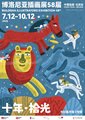 Bologna Illustrators Exhibition 58th
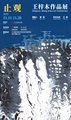 Zhiguan: Wang Zimu Art Exhibition
 Seasons of Cezanne The Immersive Experience
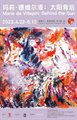 Marie de Villein: Behind the Sun
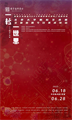 “一粒一世界——北京大学颗粒艺术展”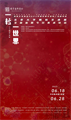
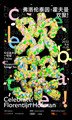 Florentijn Hofman :Celebrate!
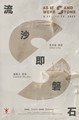 Li Nu: As if Sand Were Stone
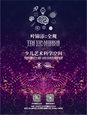 Exhibition customization course | TIM YIP MIRROR children's art class
 TAM Open Studio / Hello, New Friends
 WANG SHIKUO/TODAY ART MUSEUM YOUNG ARTIST RESIDENCY IN NEW YORK CITY
 2018 third wang shikuo award -- nomination exhibition of contemporary young artists